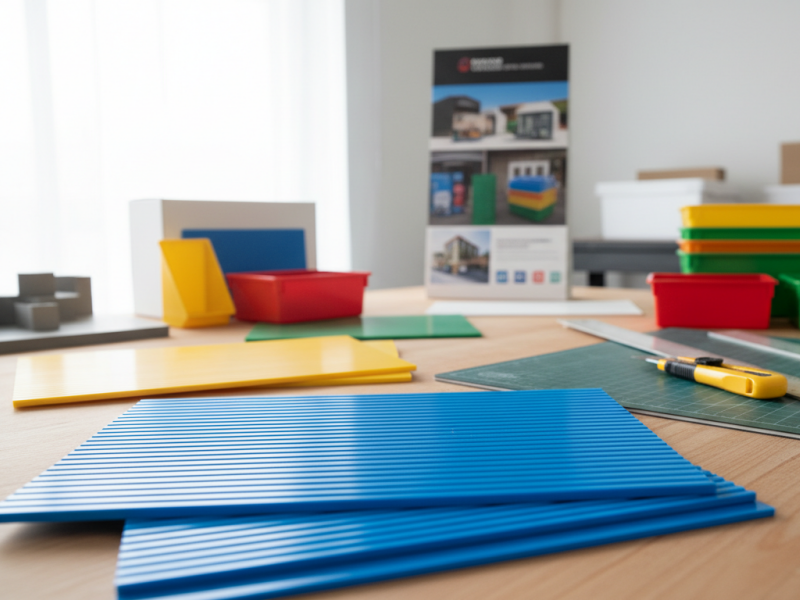
Explore corrugated plastic products as a practical, business-ready category used across the United States for signage, packaging, and protective uses.
This product class delivers lightweight rigidity and dependable performance in daily handling. It scales cost-effectively for small runs or large commercial orders.
On this page you’ll find an overview of materials, common sizes and thicknesses, performance upgrades, and customization options. We focus on helping buyers match the right sheet or panel to the job, not forcing a one-size-fits-all answer.
Buyers most often compare fluted polypropylene with twinwall polycarbonate. Choose polypropylene for economy and signage; pick polycarbonate when impact resistance and clarity matter.
Expect details on stock availability, bulk ordering, and cut-to-size and fabrication services for custom runs. Check specs, review applications, then request a quote to move from planning to purchase.
Corrugated Plastic Products for Packaging, Signage, and Protection
Many businesses rely on multi-wall sheet materials that balance low weight with reliable stiffness for packaging, signage, and temporary protection.
What fluted sheet material is and why companies choose it
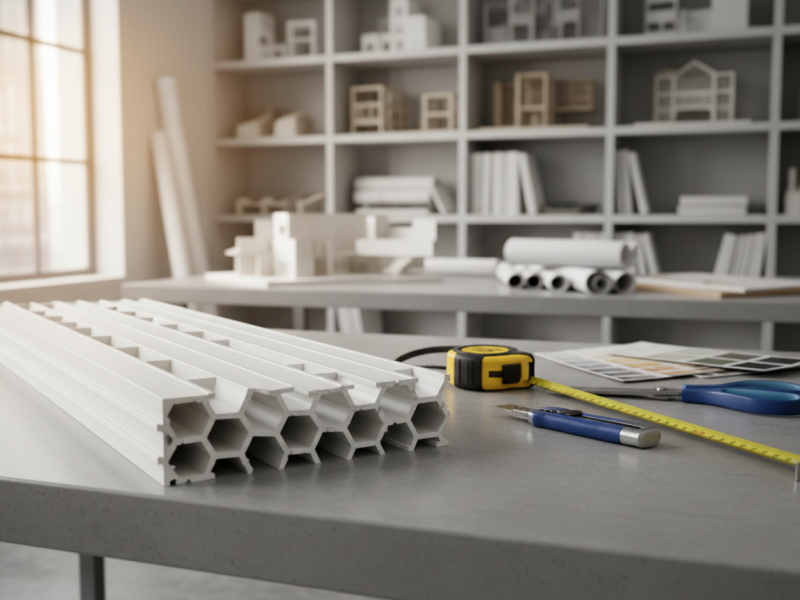
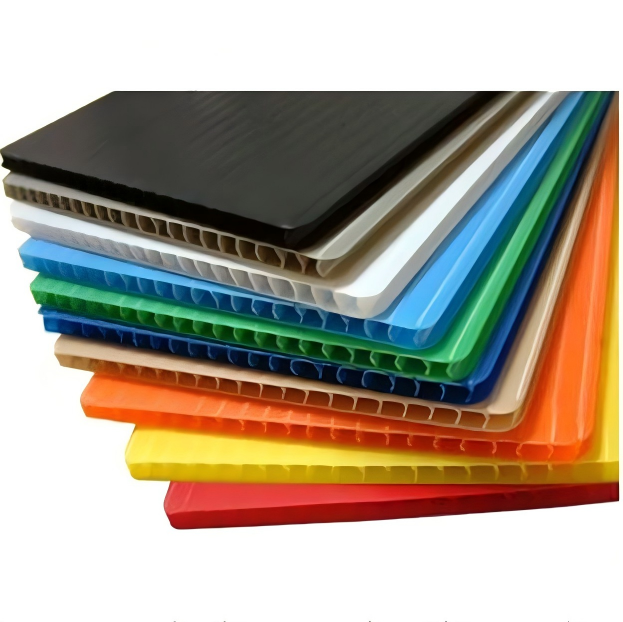
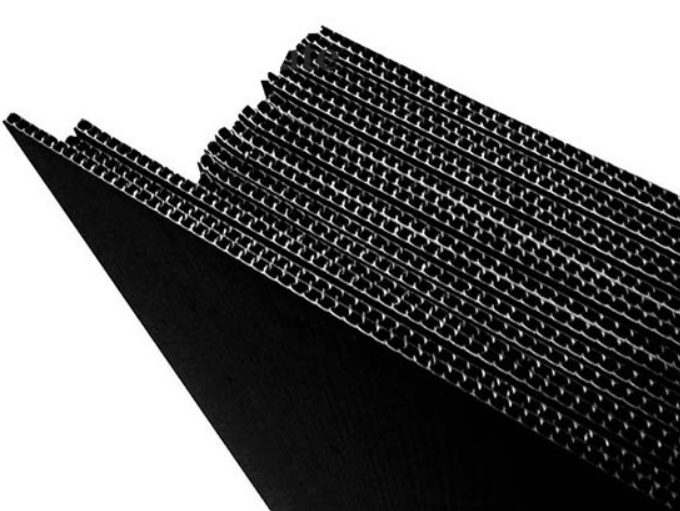
These sheets have two outer liners separated by internal flutes that act like tiny I-beams. That internal structure gives stiffness without adding heavy mass.
Companies pick these boards because panels stay rigid enough to protect goods and to present crisp graphics, yet remain easy to move and handle during packing and install.
Lightweight rigidity, moisture resistance, and everyday durability
The material resists moisture and will not rot, mildew, or corrode like paper or wood alternatives.
- Packaging: reusable bins, dividers, and shipping shields for safer transport.
- Signage: cost-effective signboards for events and promotions.
- Protection: temporary floor and wall covers on job sites and during moves.
Tear, puncture, and impact resistance make these sheets suitable for repeated handling in warehouses and retail. For outdoor signage, polypropylene sign board works short- to mid-term; longer exposure calls for UV-stable grades.
Next you’ll compare fluted polypropylene versus twinwall polycarbonate to choose the right material for your project.
Material Choices: Fluted Polypropylene Sheets vs. Twinwall Polycarbonate Panels
Choosing between polypropylene sheets and twinwall polycarbonate panels starts with how the part will be used and how long it must perform.
Fluted polypropylene for reusable packaging, print-ready signage, and displays
Fluted polypropylene is lightweight, moisture-resistant, and easy to convert. It shines for reusable packaging, print-ready signage, and trade show displays where cost and fast turnaround matter.
Fabricators can score, crease, and die-cut this sheet for foldable designs. Simple assembly—folding, rivets, or tabs—keeps production fast and affordable.
Twinwall polycarbonate for UV-stable glazing, partitions, and architectural applications
Twinwall polycarbonate offers higher impact strength, better stiffness-to-weight, and long-term weatherability. Choose these panels when glazing, skylights, or permanent partitions need UV-stable, light-diffusing performance.
PC also adds thermal insulation and clarity options that help meet lighting and structural goals in building and agricultural applications.
“Will this last outdoors, or is short-term use acceptable?”
- Indoor, low-cost needs → polypropylene sheets.
- Outdoor, structural, or long service life → twinwall polycarbonate panels.
- Decide using expected service life, exposure, and visual goals.
Once the material choice is clear, select sheet size, flute direction, thickness, and color to optimize performance and cost.
Sheet Sizes, Thickness, Colors, and Performance Options
Choosing the right sheet size, thickness, and finish helps match material to its job and budget. Practical size, gauge, and surface decisions cut waste during converting and lower total cost of ownership.
Common sizes and flute direction
Standard widths include 24″, 48″, and larger 50″+ SKUs. The most common stock format is 48″ x 96″ with flutes running the 96″ length. That orientation improves yield when nesting parts for signage and packaging.
Flute direction matters for folding, stiffness, and how panels bend during cutting. Align flutes to match fold lines and handling loads for cleaner conversions.
Thickness and gauge guidance
Typical thickness ranges help balance weight and stiffness: polypropylene sheets usually fall between 2–10 mm; twinwall panels often run 4–16 mm by SKU. Common gauges include 2mm, 4mm, 6mm, 8mm, and 10mm.
Use thinner gauges for lightweight signs and temporary protection. Select thicker gauges for returnable packaging, dividers, and high-stiffness needs.
Colors, surface finishes, and upgrades
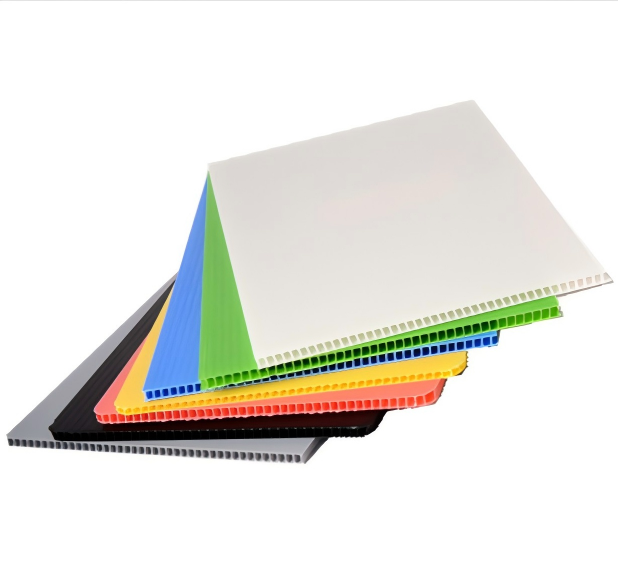
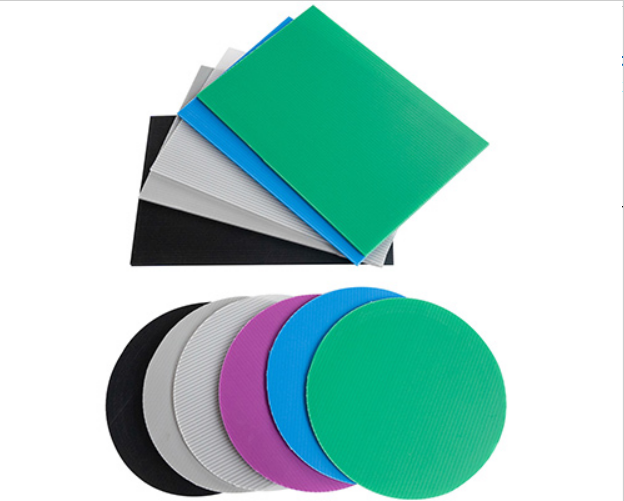
Stock colors speed turnaround; custom colors match brand requirements. Translucent white and other see-through choices work well for light-diffusing applications.
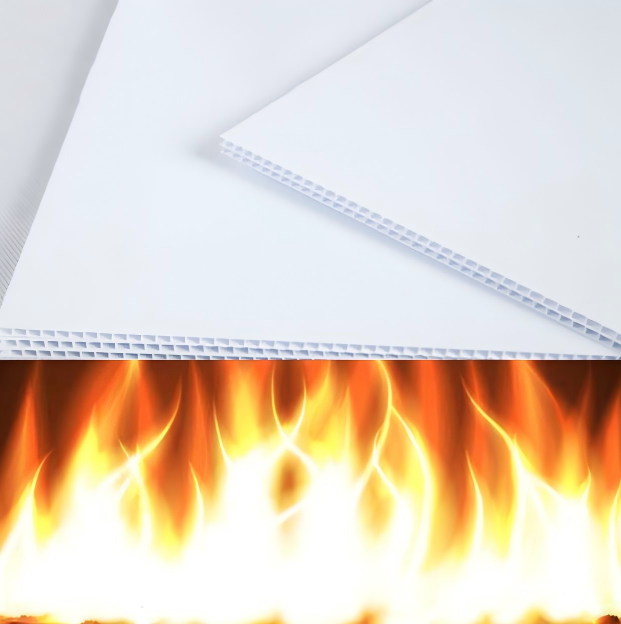
Performance upgrades include anti-static, non-skid, flame retardant, conductive or non-conductive variants, and UV inhibiting for outdoor resistance. Extra-smooth surfaces and laminations (foam, polyester, spunbond/fabric) give class-A protection and improved print appearance.
Applications Across Industries in the United States
From retail aisles to farm rows, these sheet systems solve common needs for signs, packaging, and temporary shields. This section maps key U.S. applications so buyers can match specs to use and service life.
Signage and graphics
Yard signs, wayfinding boards, retail POP, and event panels rely on lightweight boards that print cleanly and mount easily. These sign panels stay flat on stakes or frames and work with common printing workflows when surfaces are pretreated.
Returnable packaging
Reusable totes, bins, dividers, and dunnage support closed-loop logistics. Color-coded packaging speeds sorting and helps visual management on the floor.
Construction and surface protection
Temporary floor and wall shielding is easy to cut, tape, and remove after build-out or move-in. Use thicker gauges and correct flute orientation for repeated jobsite handling and damage protection.
Agriculture and building
Greenhouse roofs, skylights, partitions, and light-diffusing installations benefit from UV-stable twinwall panels. These panels add insulation and impact strength where long service and light control matter.
| Applications | Typical Use | Key Benefits | Spec Tips |
|---|---|---|---|
| Retail & Events | Yard signs, POP displays, wayfinding | Lightweight, printable, portable | Use smooth face, 4–6 mm for durability |
| Logistics | Totes, dividers, dunnage | Repeatable shape, moisture resistant | Choose thicker gauges and color coding |
| Construction | Floor/wall protection, temporary shields | Easy install, clean removal | Pick orientation to match traffic loads |
| Agriculture & Building | Greenhouse panels, skylights | UV stability, light diffusion, insulation | Twinwall panels, consider UV grade |
Printing, Fabrication, and Custom Design Services
Matching printing method to sheet treatment is essential for crisp graphics and long-term performance. The right pairing reduces rework and preserves brand appearance in signs and packaging.
Print methods and surface prep for crisp, durable graphics
Common print methods include screen, UV inkjet, and latex. Each works best with specific surface finishes and SKU treatments.
Corona treatment raises surface energy and helps inks stick to low-energy plastic sheets. That step delivers sharper, more durable results for outdoor and indoor use.
Cut-to-size and converting options
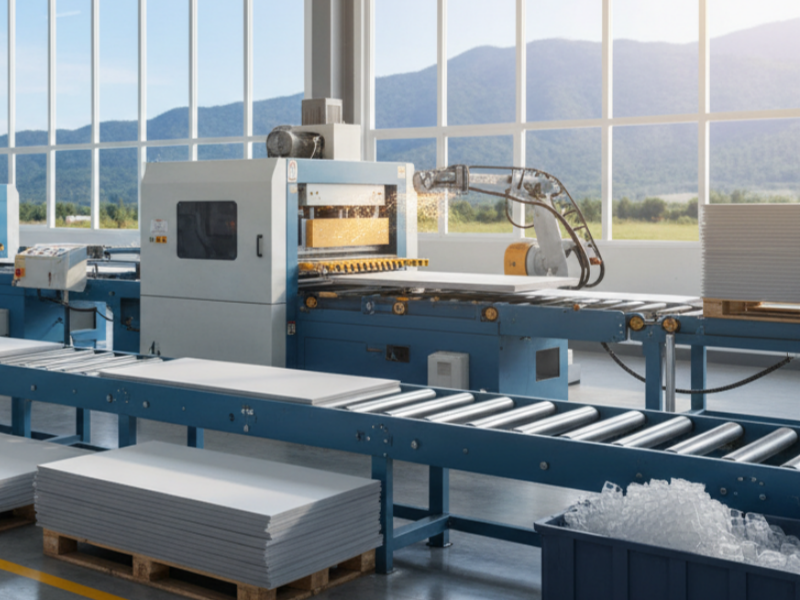
Fabrication services offer score/crease, die-cut, CNC, folding, and riveting for repeatable parts. Other joins can include stapling, stitching, drilling, and sonic welding where applicable.
Well-placed scores and clean cuts improve repeatability for returnable packaging and reduce handling failure points.
Precision, flatness, and production realities
Flatness depends on skin-to-flute ratio and tight manufacturing tolerances. Poor ratios cause waviness that affects ink laydown and final appearance.
Ask vendors for test panels when high-precision design or long runs are planned to confirm flatness and print consistency.
| Service | When to Request | Benefit |
|---|---|---|
| Bulk quote | Stock sizes or >3,200 sq ft | Lower unit cost |
| Custom runs | Special color/gram weight from ~15,000 sq ft | Brand match, tailored durability |
| Cut-to-size | Low-volume custom parts | Faster lead time, less waste |
For commercial programs, request a quote early to lock in lead times, color matches, and accessory choices. Many polypropylene sheets are optimized for repeat use due to moisture resistance and proven durability in logistics cycles.
Conclusion
Start by weighing economy versus longevity to pick the right material: fluted polypropylene for printed signs and reusable packaging, or twinwall polycarbonate for UV-stable glazing and long-term panels.
Then finalize thickness, flute direction, and any surface upgrades such as anti‑static, non‑skid, or class‑A laminations. Consider colors and finish not just for looks but to speed workflow, improve safety, and protect graphics.
This approach delivers reliable packaging, consistent signage performance, and quick-install protection that removes cleanly. The lightweight sheets offer moisture and chemical resistance and convert repeatably for high-efficiency operations.
Confirm intended use (indoor/outdoor duration, print needs, structural demand), validate specs, and request a tailored solution. Choose the right variety and move to quoting, cutting, and fabrication to get the best result.